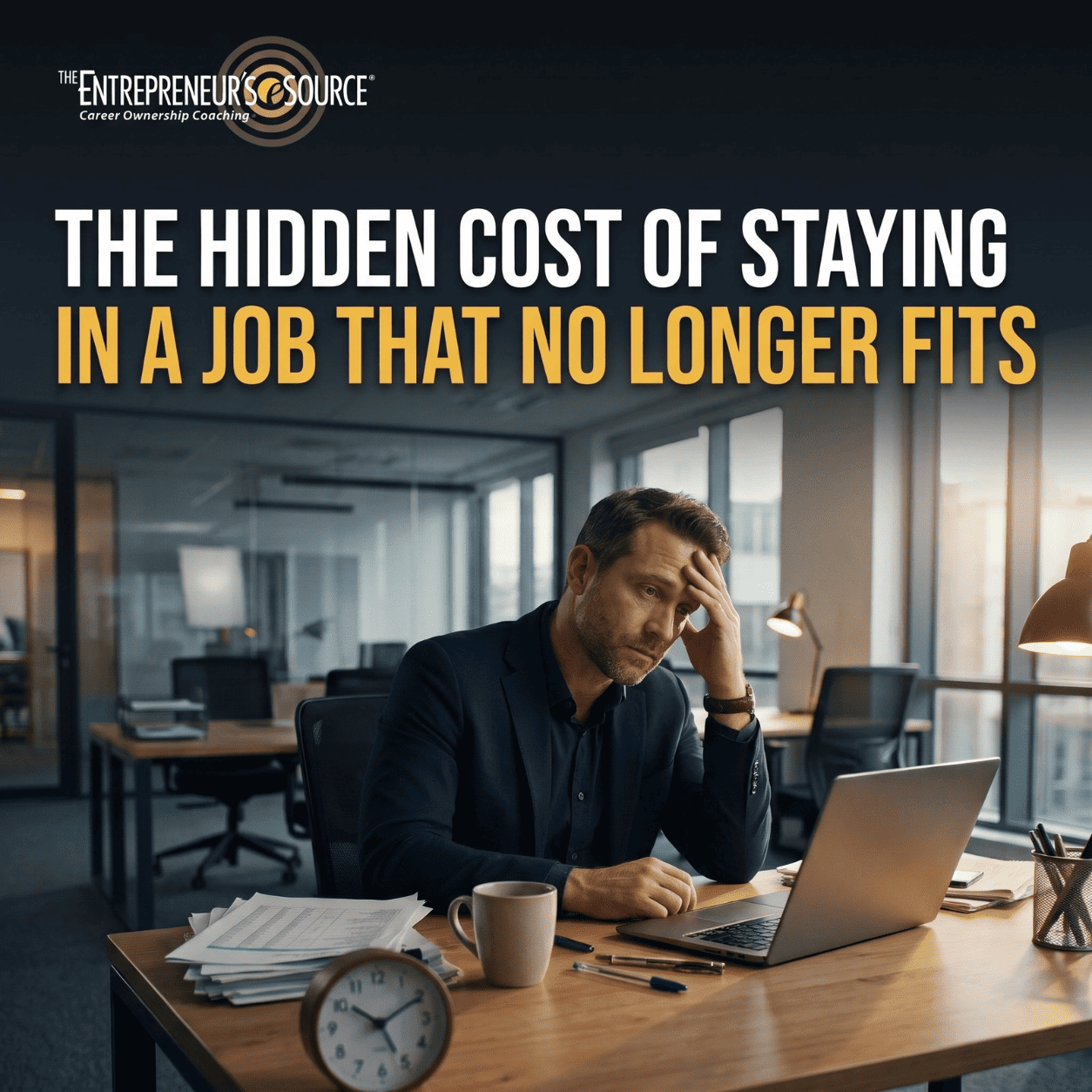
Staying put feels like the safe choice. But a job that no longer fits rarely costs you everything at once. It charges you a little every single week.
You still show up and deliver. Yet somewhere between the Sunday-night dread, stalled growth, burnout, and the third reorganization this year, your current career stopped feeling like yours. If that sounds familiar, a career change may be the right next step, especially if your work no longer fits who you are, offers little room to advance, and keeps draining your energy. For professionals who feel stuck or unfulfilled, particularly mid-career or over 40, that signal deserves more than a sigh on the commute home.
Here’s how to spot the signs you need a career change, weigh the hidden cost of staying in the wrong job, tell a bad month from a bad fit, and decide when to quit. You’ll also see career change options for experienced professionals, how to gain clarity before you move, and how to explore a new path without gambling your financial security, because staying too long in the wrong role can quietly limit your earnings, wellbeing, and time.
Why “Safe” Isn’t Always Safe Anymore
For years, staying with one company was the responsible move. The job market has changed that math.
In the American Psychological Association’s 2025 Work in America survey, more than half of U.S. workers said job insecurity was significantly affecting their stress at work. The stability you’re protecting may not be as stable as it looks. Staying is a decision too, and it deserves the same scrutiny as leaving.
7 Signs You Need a Career Change
Everyone has rough weeks. These point to something deeper:
- The dread has become routine. Not occasional. Predictable.
- You’ve stopped learning. Your current role hasn’t asked you to develop new skills in several years.
- The career ladder ends one rung up. Or the next rung already belongs to someone else.
- Your pay no longer reflects your value. Career advancement has stalled.
- Burnout feels permanent. A long weekend doesn’t restore you anymore.
- You envy the people who left. A former colleague’s new challenges excite you more than your own work.
- You can’t picture yourself here in five years.
If three or more of these hit home, it’s not a phase. It’s information.
The Hidden Costs of Staying in the Wrong Job
The real expense of a poor fit rarely shows up on a pay stub.
Your Growth Stalls
Professional success compounds. When a role stops stretching you, your expertise and development stop compounding too, and the gap between where you are and where you could be quietly widens.
Your Earning Potential Plateaus
Salary bands and a rigid job description can put a ceiling on income. Staying often means accepting someone else’s estimate of your worth.
Your Well Being and Work Life Balance Pick Up the Bill
Chronic stress follows you home, shortens your patience, and chips away at the work life balance that once made the job feel worth it.
Time Keeps Moving
This is the cost people underestimate most. Every year spent waiting for the “right moment” is a year you don’t get back.
How to Know When It’s Time to Quit Your Job (and When It Isn’t)
Not every frustration calls for a career switch. Separate the job from the career by asking:
- Would a new manager or team fix this, or would the same problem follow me?
- Is it this company, or this entire field?
- Am I running from something, or toward something?
If the problem is the environment, a new role might help. If it’s the model itself, meaning the limits on control, income, and flexibility built into traditional employment, a new job may only reset the clock.
Why a Better Resume Isn’t Always the Answer
Feeling stuck often sends people straight into a job search: resume writing, a fresh cover letter, an updated LinkedIn profile, personal branding, and interview preparation for potential employers. An updated LinkedIn profile and a strong LinkedIn presence can also boost your job visibility.
Those tools help you land a job, and execution still matters: tailor your resume for each job application, use keywords from job descriptions in your resume, and include relevant experiences in your cover letter. But those tactics do not choose the right path for you or fix a direction that doesn’t fit your career goals.
Clarity first. Tactics second.
Career Transition Options for Professionals Over 40
Mid-career is when the hidden costs feel heaviest, and when your options are broadest:
- A move into a new field where your expertise transfers; researching paths across different industries helps clarify the required skills and qualifications, and supports developing a realistic transition plan
- Consulting or project management work in your target field
- Starting a small business from scratch
- Franchise ownership, which pairs your experience with a proven system, training, and ongoing support
Each carries different trade-offs. Online courses or certifications can help you prepare for new careers, and developing new capabilities through certifications can keep you competitive in a new field. If ownership is on your radar, these signs you’re ready for franchise ownership are a helpful gut check.
Your Transferable Skills Are Worth More Than You Think
Leadership, strategic thinking, strategic planning, and a strong professional network don’t expire when you leave a job title behind. These soft skills and years of hands-on experience are often the necessary skills to run your own business or move into a field like marketing. For example, leadership and planning skills can transfer well into that kind of role.
How to Change Careers Without Losing Financial Security
Fear of giving up a steady paycheck keeps talented people stuck. It’s a reasonable fear, and a manageable one.
- Define your numbers. Know the income you need, not just the income you’d like.
- Research before you resign. Use informational interviews, industry events, and professional associations to gather valuable information about your desired field and validate market trends before a pivot; this process helps you make a more grounded decision.
- Talk to people who’ve done it. Ask what surprised them, and use those networking conversations to uncover job opportunities that aren’t publicly advertised.
- Build a timeline. Create a transition plan with clear milestones, because a planned career transition looks very different from a sudden leap.
Start With Clarity, Not a Decision
The best career changes start with a question: What do I want my life to look like? Career counseling services can help a person sort through motivations and choose a clearer direction. One useful lens is Income, Lifestyle, Wealth, and Equity (I.L.W.E.):
- Income: What do you need to earn, and what would you like to earn?
- Lifestyle: How do you want to spend your days?
- Wealth: How will you build long-term financial security?
- Equity: Are you building something you own, or something someone else owns?
Define success on those terms and the right new opportunities become easier to recognize.
Frequently Asked Questions
Should I quit my job if I’m unhappy? Not right away. Unhappiness is a signal to investigate, not an instruction to resign. First identify whether the issue is the role, the company, or traditional employment itself.
Is business ownership a good alternative to a job? It can be for people who want control, flexibility, and equity and are comfortable following a proven system. Exploring it through education first helps you decide with confidence.
Recognizing the Signs You Need a Career Change Is Only the Beginning
The hidden cost of staying in a job that no longer fits is growth, income, energy, and time, spent slowly. Noticing the signs you need a career change doesn’t obligate you to leap. It gives you permission to look, ask better questions, and choose your next move from a place of clarity instead of exhaustion.
Ready to Explore What’s Next?
If you’re curious what a career on your own terms could look like, The Entrepreneur’s Source® offers a no-pressure place to start. With more than 40 years guiding professionals through career ownership, the team can help you create a practical transition plan, understand the services offered, and achieve more clarity about whether business ownership, including becoming a Career Ownership Coach, fits your Income, Lifestyle, Wealth, and Equity goals. Explore your next steps and start the conversation at your own pace.