It’s Sunday night. Your laptop is open, three job boards are open, and you’ve read the same career change article twice without feeling any closer to an answer.
You’re not lost. You’ve built 15 or 20 years of skills, relationships, and results. The problem is that the career path in front of you no longer feels like yours, and you don’t want to make a huge decision based purely on frustration.
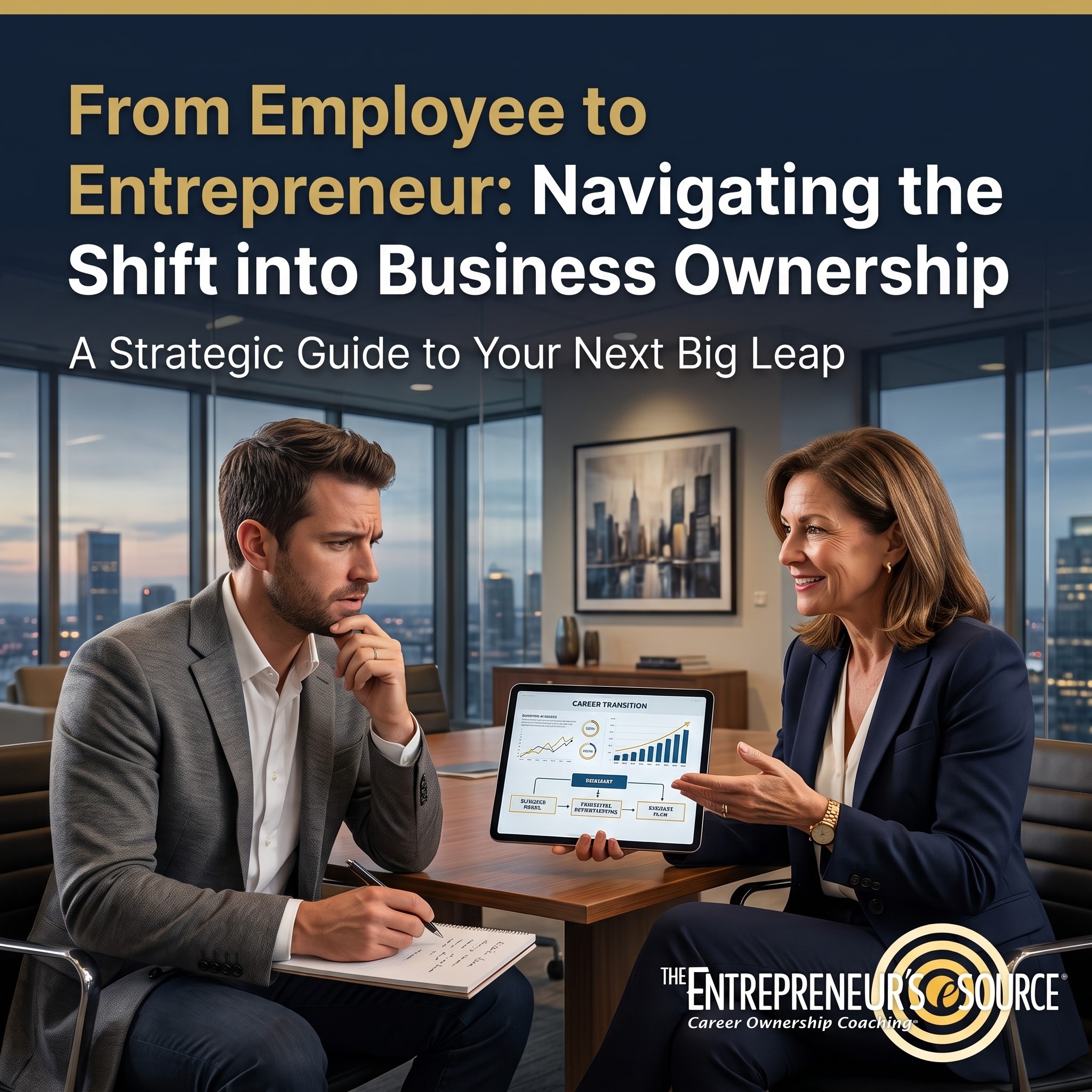
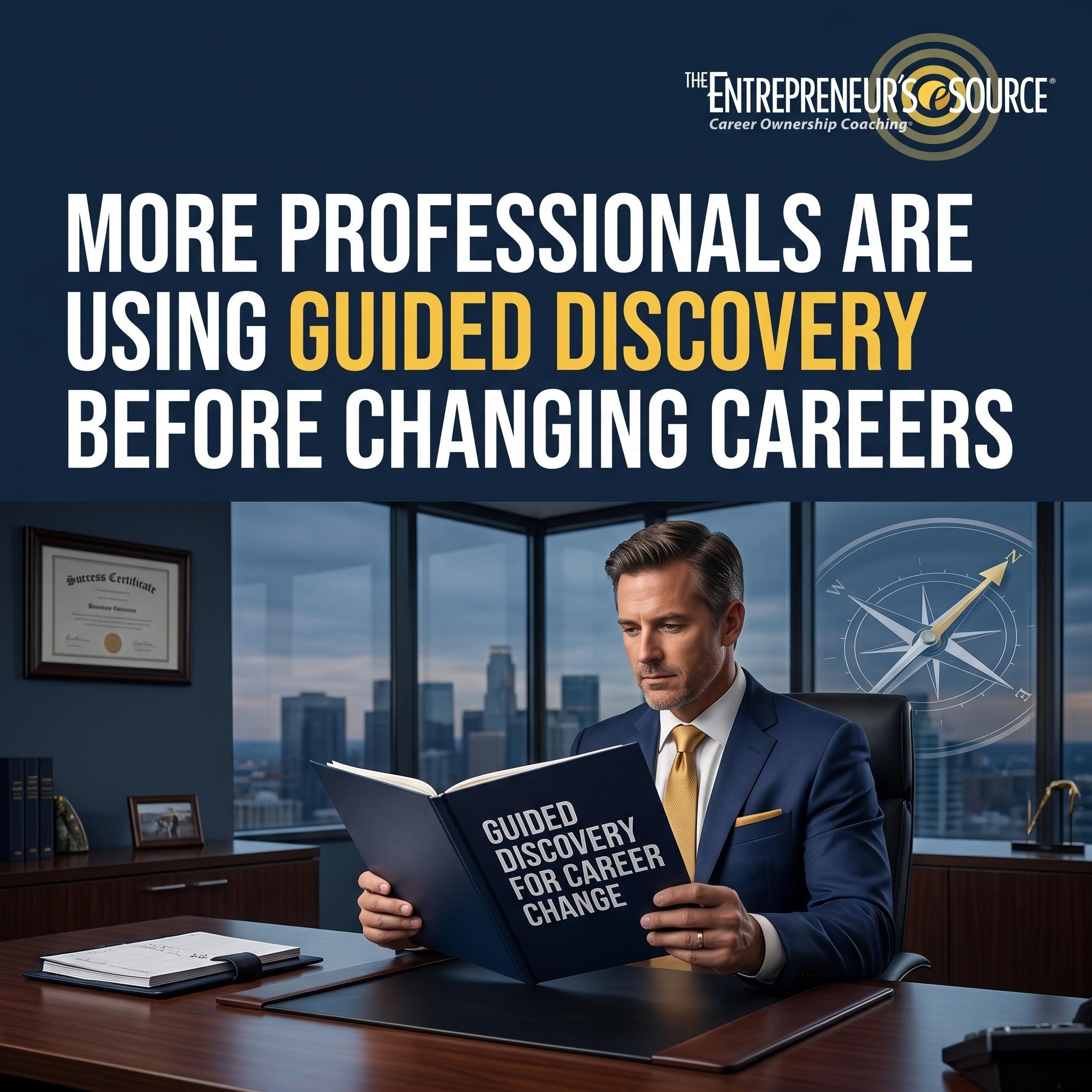
That’s exactly why more mid-career professionals are using guided discovery before making an employee to entrepreneur transition, or any major career move at all. Instead of starting with “What job should I take?” They start with a better question: “What do I actually want my life to look like?”
Why Experienced Professionals Are Rethinking Their Career Path
Changing careers isn’t just something people do in their twenties. According to the U.S. Bureau of Labor Statistics, people born in the later baby boom years held an average of 12.4 jobs between ages 18 and 54.
What has changed is why people move. Today, the reasons often sound like this:
- Stagnation: You’ve reached a certain stage, and the next rung isn’t worth the climb.
- Burnout: The exhaustion hasn’t lifted, and you can’t tell if it’s temporary or a signal.
- Loss of autonomy: Someone else decides your schedule, your role, and your future.
- Uncertainty: Restructuring, AI, and shifting industries make “stable” feel less stable every year.
Sound familiar? These challenges don’t mean you’ve failed. It means you’ve outgrown a structure that used to fit.
Career Dissatisfaction Doesn’t Automatically Mean “Start a Business”
Here’s an insight many people miss: knowing what you don’t want is not the same as knowing what you do want.
Escaping and choosing can feel identical in the moment. But escaping is a reaction to a problem. Choosing is a decision built on your values, goals, and strengths.
There’s no quick fix for a career you’ve outgrown. For some people, the answer turns out to be business ownership. For others, it’s a new role, a different company, or staying put with a clearer plan.
Discovery helps you figure out which kind of change actually suits you, before you commit your time and money to it.
What Guided Discovery Actually Means
Guided discovery is a structured process for exploring your options with someone who asks thoughtful questions and genuinely listens to the answers.
It isn’t a sales pitch, and it isn’t a quiz built on the idea that one size fits all. Think of it as career planning in the right order: the starting point is you, and the options come second.
It Starts With Questions, Not Listings
Online research gives you thousands of possibilities, but it can’t tell you which ones fit you. Guided discovery flips that. You begin with questions like:
- What does my ideal week look like, day by day?
- Which skills do I love using, and which am I ready to retire?
- What kind of work gives me energy instead of draining it?
- How much risk can I realistically take on at this stage of life?
- What do I want to prove to myself over the next five years?
Along the way, many professionals discover their skill sets travel much further than their job titles suggest. Leadership, sales, operations, and relationship building transfer into nearly every industry, including business ownership.
You’re not starting over. You’re starting from here.
Using Income, Lifestyle, Wealth, and Equity to Shape Your Career Goals
“Career clarity” can sound vague. A framework makes it concrete. One of the most useful approaches looks at four areas of your future:
- Income: What do you need to earn, and what would genuinely change your life?
- Lifestyle: How do you want to spend your time, energy, and weekends?
- Wealth: What are you building for the long term, beyond the next paycheck?
- Equity: Do you want to own something of value that grows over time?
Imagine if every option you considered was measured against those four career goals. Suddenly, comparing a promotion, a new company, and a franchise stops feeling like comparing apples to airplanes.
That’s the “aha” moment for many people: once your goals are defined, the right path becomes much easier to see.
How Guided Discovery Makes the Employee to Entrepreneur Transition Less Risky
Fear of making the wrong decision is rational. A career change affects your family, your savings, and your sense of identity.
Guided discovery doesn’t remove risk, but it replaces guesswork with information. Instead of acting on impulse, you:
- Explore options side by side, using your own criteria
- Talk with people who have already made the move
- Understand real costs, not just the price tag you see online
- Take small, informed steps rather than one giant leap
Once you’ve gathered that information, you can create a plan designed to help you achieve the life you actually want.
Where Business Ownership and Franchising Fit In
If you’ve never run a company, entrepreneurship can feel out of reach. That’s often where franchising enters the conversation.
A franchise can offer a proven model, training, and ongoing support, so you don’t have to figure everything out alone. Still, no franchise is right for everyone.
Resources like the FTC’s Franchise Fundamentals: Debunking five myths about buying a franchise and the SBA’s overview of buying a business or franchise are smart reading before you evaluate any opportunity.
Why a Trusted Guide Beats Going It Alone
You can work through all of this by yourself. It’s just slower, lonelier, and easier to talk yourself out of an option that might fit you well.
The hardest thing for a lot of professionals is seeing their own blind spots. A trusted coach brings structure, perspective, and accountability, and helps you notice patterns in your thinking, like the difference between “I can’t” and “I’ve never learned how.”
Good guidance also helps you connect with resources, networks, and a support team you might never find on your own. That kind of support is often more important than people expect.
Think of it like going back to school, except the subject is you. The learning, growth, and confidence you build stay with you, whatever you choose in the end.
Frequently Asked Questions
What is guided discovery in career planning? It’s a structured process where a coach helps you explore your goals, values, and skills before choosing a specific job, business, or franchise.
Do I need business experience to make an employee to entrepreneur transition? No. Many business owners come from corporate roles and lean on training, support, and a proven system to fill the gaps.
How long does the discovery process take? It varies. Some people gain clarity in a few weeks of focused conversations, while others take longer to research and reflect.
Will guided discovery push me toward owning a business? It shouldn’t. A good process shows you what fits your goals, even if the answer is staying in your current career for another year or more.
Your Employee to Entrepreneur Transition Starts With Clarity
The best career decisions don’t begin with a listing, a job offer, or a franchise brochure. They begin with understanding yourself.
Whether your next step is an employee to entrepreneur transition or a smarter move within your field, guided discovery helps you choose with confidence instead of reacting out of frustration.
Ready to Explore Your Next Step?
If you’re curious what your Career 2.0 could look like, connecting with a Career Ownership Coach at The Entrepreneur’s Source® is a free, no-obligation way to begin. You’ll explore your goals through the I.L.W.E.™ framework (Income, Lifestyle, Wealth, and Equity), at your own pace and with no pressure to commit.