
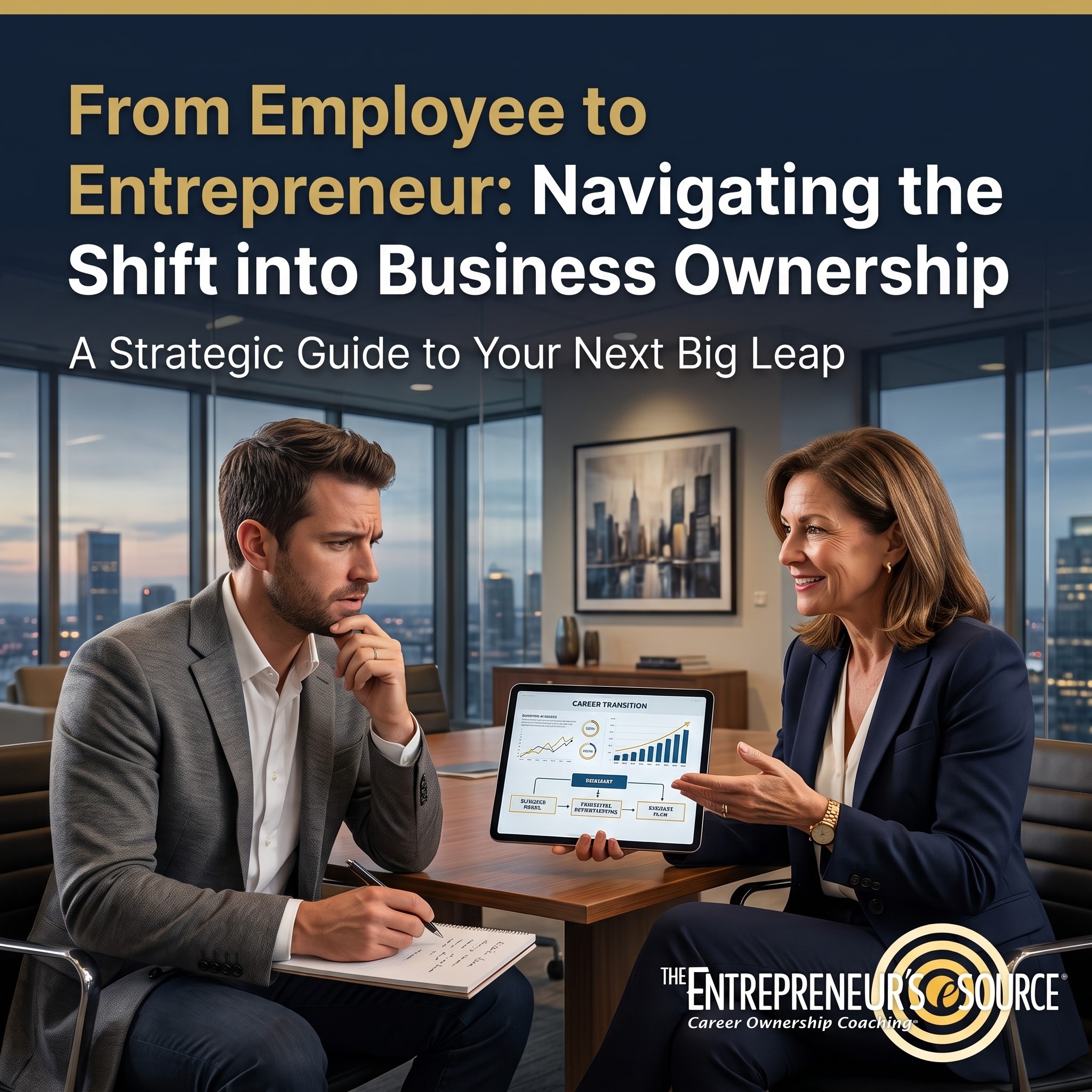
It’s 9:47 on a Sunday night. Monday’s calendar is already full, and you’ve just typed “how to leave my job and start a business” into a search bar for the third time this month.
Sound familiar?
You’re not alone. Many experienced professionals reach a point where they want more autonomy, more control over their schedule, and the freedom of running their own business. But the questions pile up fast. What comes next? What if I lose my financial stability? What if I choose wrong?
Here’s the good news: a successful employee to entrepreneur transition rarely starts with a dramatic resignation. It starts with education, self-reflection, and a series of small, informed steps. This article walks through each one.
Why the Employee to Entrepreneur Transition Rarely Happens Overnight
Popular culture loves the story of the person who quits on Friday and becomes their own boss by Monday. In real life, most successful entrepreneurs follow a far quieter path.
They research. They ask questions. They test their assumptions before they spend money.
Entrepreneurial success is usually built on preparation, not impulse.
The shift from employee to business owner is a transition, not a jump. It changes how you think about income, risk, time, and responsibility. That takes time, and that’s okay.
In fact, giving yourself room to explore is often what separates a thoughtful business venture from a reactive one.
The Fear of Losing Financial Stability Is Worth Planning For, Not Ignoring
Walking away from a steady paycheck is one of the biggest concerns aspiring entrepreneurs face. It deserves an honest conversation.
Know Your Numbers and Business Plan Before You Choose a Business
Before evaluating any new business, get clear on your own financial picture:
- How many months of personal expenses could you cover while a business ramps up?
- What startup costs and ongoing operating expenses could you realistically handle?
- Would you self-fund, or work with financial institutions, lenders, angel investors, or other potential investors?
- Have you accounted for all the costs involved, including business insurance, operating licenses, and working capital?
- How would your household manage variable cash flow in the early months?
Many people assume every business requires a significant capital investment. In reality, business models vary widely. Some require real estate, inventory, staff, and eventually multiple locations. Others run with low overhead from a laptop and a phone.
Understanding your comfort zone first helps you filter opportunities quickly and confidently.
You Don’t Have to Build Everything From Scratch
Here’s an assumption worth rethinking: to become an entrepreneur, you have to invent a brand-new idea.
Not necessarily.
For many professionals, franchise ownership offers a different entry point into business ownership, and many first-time buyers start with a single-unit franchise. Instead of creating every process yourself, a franchise business typically provides:
- A proven business model with established processes, and in some brands, room for a semi-absentee setup with hired managers
- Initial training, ongoing training, and business management training
- Brand recognition and a marketing strategy
- A support network of current franchise owners
- Guidance on day-to-day operations
The franchise fee is a major upfront cost for access to the brand and system, often ranges from tens to hundreds of thousands of dollars, and may be non-refundable.
The franchise model is designed so you can focus on growth instead of figuring out daily operations alone.
No business is free of significant risk, and franchise systems are no exception. But for someone intimidated by starting from zero, a structured framework can make ownership feel far more approachable.
Your Business Experience Is More Transferable Than You Think
Maybe you’ve spent 20 years in operations, healthcare, finance, sales, or education. You might be thinking, “I’ve never owned a business.”
But have you led teams? Managed budgets? Build client relationships? Solved problems under pressure?
Those skills are the foundation of an entrepreneurial mindset.
Your business background, communication skills, and sound business judgment travel with you. Many new franchisees don’t come from the industry they enter. They build a successful business by pairing their personal qualities with a proven system and a willingness to learn, growing into a successful entrepreneur along the way.
“What Kind of Own Business Should I Own?” Starts With a Different Question
Most people begin by asking which business to buy. A better starting point is this: what kind of life do you want your business to support?
Skip that question, and it’s surprisingly easy to trade a demanding job for an even more demanding business.
The I.L.W.E.™ framework helps you define success on your own terms:
- Income: What do you need to earn, and when?
- Lifestyle: How many hours, what kind of schedule, and how much flexibility?
- Wealth: How will you build assets over time, rather than simply earning a paycheck?
- Equity: Will you own something with lasting value and a possible exit strategy?
Once those answers are clear, the list of business opportunities that truly fit you often gets much shorter. And much more interesting.
How to Evaluate a Business Opportunity With Due Diligence, Not Guessing
Not knowing how to judge an opportunity is a common reason people stay stuck. The good news? Franchising comes with built-in transparency.
Under the FTC’s Franchise Rule, franchisors must give potential franchisees a Franchise Disclosure Document (FDD) at least 14 calendar days before any agreement is signed or money is paid. For any potential franchise owner, it’s one of the most useful research tools available. The FDD outlines key details of the franchise offering, including:
- Initial franchise fees and ongoing fee obligations
- Estimated startup costs and business expenses
- Advertising funds contributions
- Training and support commitments
- Franchise agreement terms and contractual obligations
- Financial performance representations, such as average gross sales, if the franchisor chooses to provide them
- The franchisor’s audited financial statements
Beyond the FDD, market research matters too. Look at customer demand, your target customers, and the potential for repeat business in the markets you’d serve.
Talk With Current Franchisees About Franchise Ownership
Some of the most valuable insights come from other entrepreneurs already doing the work. Consider asking current franchisees:
- What surprised you most in your first year?
- How strong is the franchise relationship day to day?
- Does the ongoing support match what you expected?
- Would you make the same decision again?
Before committing to anything, review the FDD and franchise agreement with a qualified franchise attorney and financial advisor.
A Step-by-Step Path for a Smoother Employee to Entrepreneur Transition
Rather than one giant leap, think of your transition in stages:
- Reflect. Clarify your goals using Income, Lifestyle, Wealth, and Equity.
- Assess. Review your finances, risk tolerance, and transferable skills.
- Educate. Learn about different business structures, business models, and franchise opportunities.
- Evaluate. Review disclosure documents, talk to owners, and compare options against your goals.
- Decide. Move forward only when an opportunity aligns with the life you want.
Imagine if your next career move felt like a well-planned new chapter rather than a leap of faith.
Clarity Reduces the Fear of Making the Wrong Decision
Fear of choosing wrong keeps many talented professionals frozen. But that fear usually comes from missing information, not missing ability.
That’s why many entrepreneurs rely on guidance from business coaches or a franchise consultant during exploration. A good guide won’t push you toward a specific brand. They’ll help you ask better questions, challenge assumptions, and see options you may not have considered.
Sometimes the best outcome of exploration is realizing an opportunity isn’t right for you. That’s not failure. That’s clarity.
Frequently Asked Questions
How long does the employee to entrepreneur transition usually take? It varies. Some people explore for a few months; others take a year or more. What matters most is making a decision based on education rather than urgency.
Do I need a business plan before exploring franchise ownership? Not to start exploring. As you get closer to a decision, a business plan helps you map startup costs, cash flow, and goals, and many lenders will expect one.
Can I keep my job while exploring business ownership? Yes. Many professionals research options, attend discovery conversations, and review opportunities while still employed.
Is franchising less risky than starting a small business from scratch? Franchising offers established systems and support, but no business is risk-free. Careful research, professional advice, and alignment with your personal goals are essential.
Your Transition Starts With Clarity, Not Courage Alone
The employee to entrepreneur transition isn’t about quitting in a blaze of glory. It’s about understanding your goals, knowing your numbers, and exploring opportunities with open eyes. When you move from curiosity to clarity, the next step stops feeling like a leap and starts feeling like a plan.
Ready to Explore What’s Next?
If you’re wondering what business ownership could look like for you, The Entrepreneur’s Source® offers a no-pressure, education-first Discovery Process to help you explore your options at your own pace. Through one-on-one coaching and the I.L.W.E.™ framework, you can discover whether career ownership fits the life you want to build.