If you’ve been quietly wondering whether becoming a coach could be your next chapter, this article is for you.
Maybe you’ve built a successful corporate career. Maybe you’ve led teams, managed clients, or guided others through complex decisions. And lately, you’ve started asking a bigger question: Is there a more meaningful, flexible way to use my experience?
This is not an evaluation.
It’s not a sales pitch.
And it’s not about convincing you to make a leap.
It’s about clarity.
More professionals are exploring coaching as a second career, a business ownership opportunity, or a way to transition out of traditional employment. But clarity matters more than speed. The right next step begins with understanding yourself.
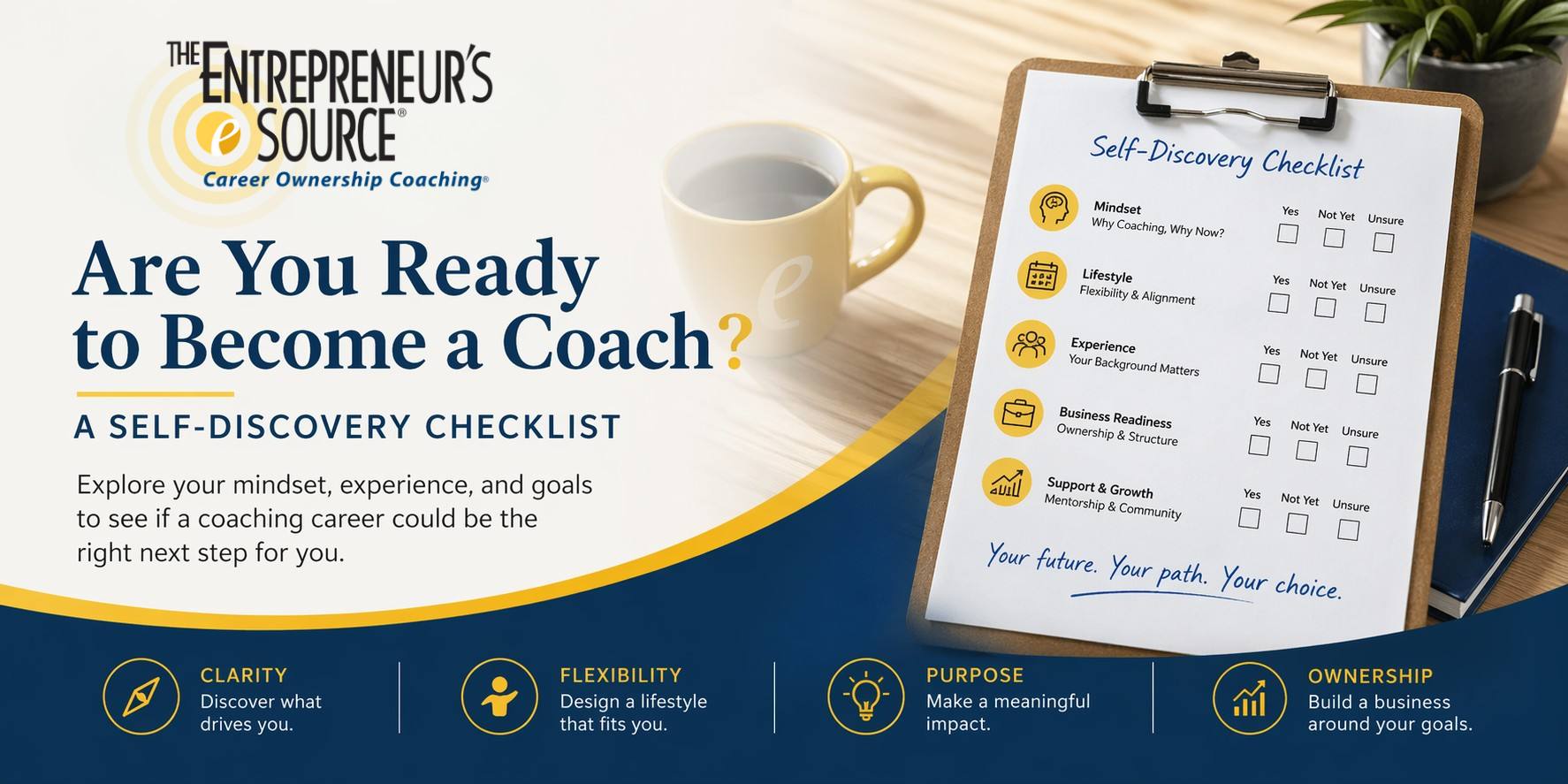
As you read, simply note each item as:
- Yes
- Not Yet
- Unsure
Patterns matter more than perfect answers.
Mindset – Why Coaching, Why Now?
Start with the right questions
Before thinking about certifications or business models, it’s worth examining your mindset. Coaching is less about tactics and more about orientation – how you see work, growth, and impact.
Consider the following:
- I’m actively looking for an alternative to traditional employment.
- I want a career built around meaning, not just income.
- I’m comfortable exploring possibilities without pressure.
- I’m curious about guiding others through clarity and decision-making.
At the beginning of a coaching career, mindset matters more than skills. Skills can be developed. Frameworks can be learned. But curiosity, patience, and a desire to help others think more clearly – those are foundational.
Many people researching how to become a coach assume they need to be motivational speakers or subject-matter experts. In reality, professional coaching is about structured conversations that help others discover their own direction.
Lifestyle & Flexibility
Does this lifestyle fit the life you want?
For many professionals, the interest in coaching begins with lifestyle design.
Ask yourself:
- I want flexibility in how and when I work.
- I’m interested in a virtual, location-independent business.
- I value autonomy and schedule control.
- I want my work to fit into my life, not replace it.
A coaching business – particularly a low-overhead, service-based model – can offer flexibility that traditional employment often cannot. Many coaches work virtually, manage their own calendars, and build schedules around family, travel, or personal priorities.
That doesn’t mean it’s effortless. It does mean the structure is different.
If you’re exploring a career change to coaching, lifestyle alignment is just as important as income potential. A sustainable coaching business is designed intentionally – not reactively.
Your Professional Experience
You may already have more relevant experience than you think
One common misconception about becoming a coach is that you must “start over.” In truth, many professionals already possess highly transferable skills.
Reflect on this:
- I’ve worked with professionals, business owners, or leaders.
- I enjoy asking thoughtful questions and listening deeply.
- I help people think through complex decisions.
- I’m comfortable having strategic conversations.
If you’ve led teams, managed projects, built client relationships, or mentored colleagues, you’ve likely already practiced elements of professional coaching.
It’s important to clarify something: coaching is not motivational speaking. It’s not advising. And it’s not consulting.
Coaching is structured discovery – guiding individuals through clarity, options, and informed decisions. If you naturally lean toward helping others think, rather than telling them what to do, that’s often a strong indicator of fit.
When people search for coach training programs in the U.S., they often discover that their past career has prepared them more than they realized.
Business Ownership Readiness
Coaching is a career – and a business
Becoming a coach isn’t just about conversations. It’s about owning a business.
This is where many readers self-qualify.
Consider:
- I’m open to owning a business rather than having a job.
- I prefer a proven framework over starting from scratch.
- I value education, structure, and support.
- I’m looking for a low-overhead, service-based model.
A coaching career can offer independence – but independence works best with structure. Many successful coaches choose models that provide systems, processes, and training rather than attempting to build everything alone.
If you’re researching starting a coaching business, the question isn’t only “Can I coach?” It’s also “Do I want to operate as a business owner?”
The answer doesn’t need to be immediate. But it does need to be honest.
Support & Growth Expectations
You don’t have to do this alone
One of the biggest myths about entrepreneurship is that you must figure it out by yourself.
Ask yourself:
- Ongoing training is important to me.
- I value mentorship and community.
- I prefer a non-sales, education-first approach.
- I want access to tools, systems, and proven processes.
Many professionals exploring coaching careers are not looking for hype. They’re looking for structure. Education. Support. A thoughtful path forward.
If you’re evaluating a coaching business opportunity, the quality of training, mentorship, and community can significantly shape both confidence and outcomes.
Growth in coaching – as in any profession – is continuous. The question isn’t whether you’ll need support. It’s whether you value having it.
What Your Answers May Be Telling You
Patterns matter more than perfect answers
Take a moment to look back at your responses.
- Mostly “Yes”
You may be closer to readiness than you thought. Exploring next steps could bring useful clarity.
- Many “Not Yet”
You’re not behind. You’re in exploration mode – which is exactly where thoughtful career decisions begin.
- Mostly “Unsure”
“Unsure” is often the most interesting answer. It usually signals curiosity – not resistance. And curiosity is a powerful starting point.
Becoming a coach isn’t about rushing into a decision. It’s about understanding alignment: mindset, lifestyle, experience, business readiness, and support expectations.
What’s the Next Step If You’re Curious?
Clarity rarely comes from overthinking alone.
It comes from conversation – not obligation.
If this checklist raised questions or confirmed interests, the next step isn’t commitment. It’s exploration.
You can request information or start a conversation to learn more about building a coaching career in a structured, discovery-focused environment.
Free. No obligation. Focused on clarity – not pressure.
Whether you ultimately pursue coaching or not, the goal is the same: making your next move intentionally.
And that begins with understanding yourself.